
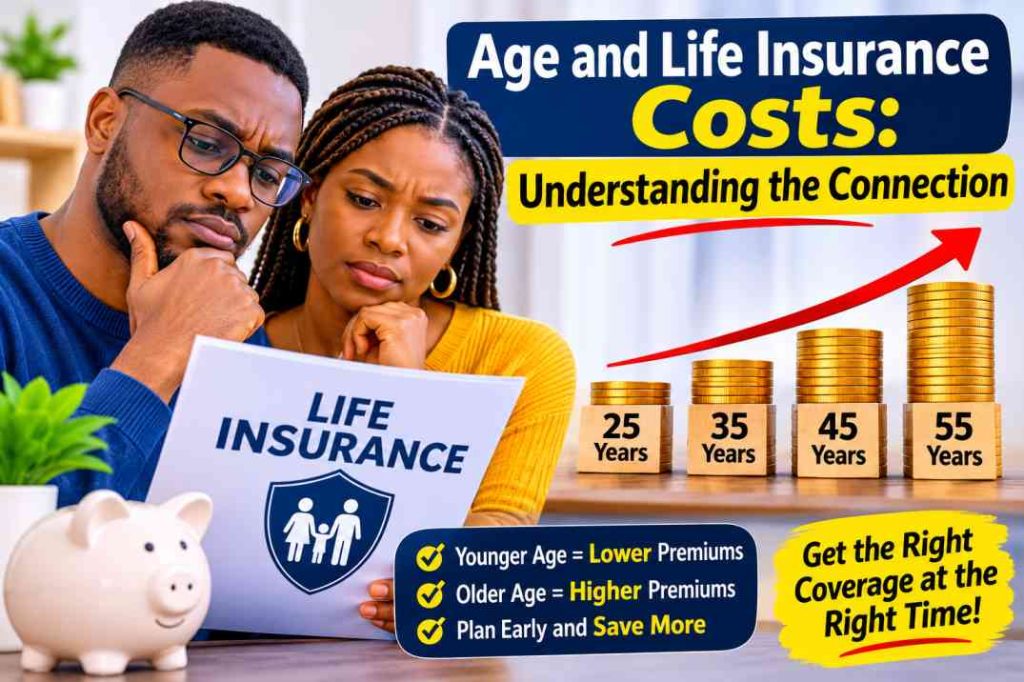
17 Steps to Study on Age and Life Insurance Costs: Understanding the Connection
Life insurance premiums generally increase as you get older, but age is only one of several factors that determine how much you pay for coverage. Your health, lifestyle, policy type, coverage amount, and the length of your policy can all influence your final premium.
For many people, life insurance is an important part of financial planning. It can help protect a spouse, provide for children, cover outstanding debts, and give loved ones financial support after an unexpected death. However, the cost of that protection can vary significantly depending on when you purchase a policy and which type of coverage you choose.
Someone purchasing life insurance in their twenties may qualify for lower premiums than someone buying the same coverage in their fifties, assuming their other underwriting characteristics are comparable. Nevertheless, purchasing insurance early is not automatically the right decision for everyone. The most suitable policy depends on your financial responsibilities, budget, long-term goals, and the people who depend on you.
Understanding the connection between age and life insurance costs can help you make better decisions, avoid unnecessary expenses, and select coverage that fits your circumstances.
In this guide, we explore how age affects premiums, why insurers consider age when evaluating applications, how life insurance costs differ across age groups, and practical ways to find affordable coverage at different stages of life.

What you will learn:
- Why life insurance generally becomes more expensive with age.
- How premiums can differ for people in their twenties, thirties, forties, fifties, and sixties.
- How term life insurance compares with whole life and universal life insurance.
- Why health, smoking, and family medical history can affect premiums.
- Whether buying life insurance when you are young is worthwhile.
- How older adults can find appropriate and affordable coverage.
- How to compare policies and avoid common purchasing mistakes.
- How to determine how much life insurance your family may need.
1. What Is Life Insurance, and Why Does Age Matter?
Life insurance is a financial agreement between a policyholder and an insurance company. In exchange for premium payments, the insurer provides a specified death benefit to the designated beneficiaries if the insured person dies under circumstances covered by the policy.
The death benefit can help surviving family members maintain financial stability during a difficult period.
For example, imagine a parent who earns $75,000 annually and supports a spouse and two children. If that parent dies unexpectedly, the family may lose a substantial source of income.
A suitable life insurance policy could provide money to help cover mortgage payments, childcare, education, household expenses, and other financial obligations.
Age matters because insurers evaluate the likelihood that they will have to pay a death benefit during the period of coverage. In general, the probability of death increases as people get older. This means that, all else being equal, an older applicant usually represents a greater insurance risk than a younger applicant.
The National Association of Insurance Commissioners explains that insurers consider individual risk when determining insurance prices. For life insurance, age is one factor that can influence the premium.
Read the NAIC’s guide to how insurance works for more information about risk-based pricing.
However, age does not tell the entire story. Two people who are the same age may receive different quotes because of differences in their health, tobacco use, family medical history, occupation, and the coverage they request.
Understanding these differences is essential before comparing life insurance prices.
2. Why Does Life Insurance Become More Expensive as You Age?
The relationship between age and life insurance costs is largely connected to risk assessment.
Insurance companies collect premiums from policyholders and use those funds, together with investment income and other financial resources, to pay claims and cover operating expenses.
To determine an appropriate premium, insurers estimate the probability of a claim and consider other costs associated with providing coverage.
Several factors explain why age can increase the price of life insurance.
Higher mortality risk
Mortality risk refers to the probability of death within a particular period.
Although individual circumstances differ, mortality risk generally increases with age. An insurer issuing a policy to a 55-year-old will typically evaluate a different level of risk from that associated with an otherwise comparable 25-year-old.
For a fixed-term policy, this affects the expected likelihood that the insurer will pay the death benefit before the policy expires.
Consequently, older applicants generally pay more for comparable new coverage.
Greater likelihood of health complications
Age is also associated with a higher likelihood of developing certain health conditions.
Conditions such as cardiovascular disease, diabetes, and some cancers can influence an insurer’s underwriting decision, depending on the applicant’s circumstances and the company’s guidelines.
However, developing a health condition is not an automatic reason for being denied coverage. Insurers assess medical information individually, and some people with controlled medical conditions can qualify for life insurance.
The important distinction is that age and health can interact to influence the premium an insurer offers.
Fewer years to spread the insurance risk
The length of time an insurer expects to provide coverage is another important consideration.
A younger person purchasing a 20-year level-term policy may have coverage extending from their twenties into their forties. Someone purchasing the same policy in their fifties may have coverage extending into their seventies.
The insurer evaluates the likelihood of a claim over the specified coverage period.
Although the premium for a level-term policy generally remains fixed during its guaranteed level-premium period, the price of purchasing a new policy tends to increase as the applicant gets older.
Higher costs for certain types of coverage
Age can be particularly important when someone wants permanent life insurance or coverage intended to last throughout their lifetime.
Permanent policies are designed differently from term policies, and their pricing reflects factors such as lifetime coverage obligations, insurance costs, policy expenses, and any cash-value features.
An older applicant may therefore face substantially higher premiums when purchasing permanent coverage.
The key takeaway: Age generally affects the price of new life insurance because it changes the insurer’s assessment of risk. However, the extent of the increase depends on the policy, underwriting criteria, and individual circumstances.
3. How Age Affects Life Insurance Costs at Different Stages of Life
There is no single premium that applies to everyone in an age group. Actual prices depend on the amount of coverage, policy type, health classification, location, and insurer.
Nevertheless, understanding the typical financial considerations at different ages can help you make informed decisions.

Life insurance in your twenties
People in their twenties may have some of the lowest available premiums for new life insurance coverage, particularly when they are healthy and purchasing term insurance.
At this stage, many people are beginning their careers, building savings, paying off education-related debt, or establishing long-term relationships.
Some have few financial dependants and may not need substantial life insurance. Others already have children, a spouse, or co-signed financial obligations that make coverage important.
Why buying in your twenties may be beneficial
One potential advantage is the opportunity to secure a premium based on your current age and health.
For example, imagine a healthy 27-year-old who purchases a 20-year level-term policy. If the policy guarantees a fixed premium for the full term, the insured person can budget around that payment until the policy expires.
The person does not automatically face annual premium increases simply because they turn 28, 35, or 40 during the guaranteed level-premium period.
Another advantage is that purchasing coverage while healthy may reduce the risk that a future health change makes new insurance more expensive or harder to obtain.
However, buying insurance simply because premiums are relatively low is not necessarily a good financial decision.
If nobody depends on your income and you have no significant financial obligations that life insurance needs to cover, you may have less immediate need for a large policy.
The decision should be based on your circumstances rather than age alone.
Life insurance in your thirties
Your thirties are often associated with significant financial commitments.
You may purchase a home, get married, have children, or become responsible for supporting other family members.
As these obligations grow, life insurance can become more important.
For example, a 34-year-old homeowner with a spouse and two young children may want coverage that helps replace income and support the household if they die unexpectedly.
A term policy lasting 20 or 30 years could potentially provide protection during the period when the family has its largest financial obligations.
The appropriate term depends on the household’s circumstances, including the ages of the children, mortgage duration, and anticipated retirement date.
Why premiums may still be attractive
A healthy person in their thirties may still qualify for relatively affordable term coverage compared with an otherwise similar applicant in their fifties.
However, the exact difference varies by insurer and underwriting classification.
People in their thirties should also consider whether existing employer-provided coverage is sufficient.
Workplace insurance can be useful, but it may not provide enough protection for a household’s needs. Coverage may also be linked to employment, so it is important to understand what happens if you change jobs or retire.
Life insurance in your forties
People in their forties may have more income and assets than they did earlier in life, but they may also have larger financial responsibilities.
Mortgage balances, school expenses, dependent family members, and other obligations can make life insurance particularly valuable.
At this stage, premiums for newly purchased coverage will generally be higher than comparable premiums available at younger ages.
However, this does not mean that purchasing insurance in your forties is too late.
A 43-year-old with children who still depend on their income may have a strong reason to obtain coverage.
Similarly, someone who recently became a homeowner may want to protect their family against the financial consequences of losing a primary income earner.
What should you consider in your forties?
Start by evaluating the financial obligations that would remain if you died.
These might include:
- Outstanding mortgage payments.
- Children’s education expenses.
- Personal loans and other debts.
- Household living expenses.
- Financial support for a spouse or dependent parent.
- Funeral and other final expenses.
Then compare the cost of appropriate coverage with your available budget.
If you already have a policy, review whether its death benefit remains sufficient. Your income and responsibilities may have increased since you purchased it.
However, do not automatically replace an existing policy simply because another company offers an attractive quote. Consider the new policy’s terms, exclusions, underwriting requirements, and potential effect on your coverage before making a change.
Life insurance in your fifties
Life insurance can still provide important financial protection in your fifties, but affordability and policy selection become especially important.
Some people in this age group are approaching retirement, paying off their mortgages, or preparing to help children become financially independent.
Others still support dependants or have substantial debts.
The right amount of coverage depends on those circumstances.
For example, a 54-year-old with a dependent spouse and a mortgage that will take another 15 years to repay may still benefit from term life insurance.
However, a person whose children are financially independent, whose mortgage is paid off, and whose savings can cover final expenses may need less insurance than they did earlier in life.
Important considerations for people in their fifties
First, assess whether you need to replace income for a specific period or provide financial support throughout your lifetime.
Second, compare term and permanent policies carefully. Permanent insurance may offer lifetime coverage, but its premiums can be considerably higher.
Third, consider whether your existing savings and investments already cover some of the financial obligations you want insurance to address.
Finally, evaluate the effect of premiums on your retirement budget. A policy that becomes difficult to maintain after retirement may not provide the long-term protection you expect.
Life insurance in your sixties and beyond
People in their sixties may have different insurance needs from younger adults.
Some are primarily concerned with replacing income for a dependent spouse. Others want to leave money to family members, support charitable causes, or provide funds for final expenses.
Coverage may still be available, but eligibility, policy options, premium costs, and maximum coverage amounts vary by insurer.
For older applicants, underwriting may also place greater importance on health history and existing medical conditions.
If you are considering life insurance in your sixties, begin by identifying the financial problem you want the policy to solve.
For example, if your primary objective is to provide money for funeral expenses, you may not need the same coverage amount as someone who wants to replace a decade of household income.
Some insurers offer smaller policies designed for final expenses. These may be useful for certain applicants, although they should be compared carefully because the cost per dollar of coverage can be relatively high.
Do not assume that the first policy marketed to older adults is necessarily the best option.
Compare the premium, death benefit, waiting periods where applicable, exclusions, and payment obligations.
4. Does Buying Life Insurance Earlier Always Save Money?
Buying life insurance earlier can reduce the cost of obtaining a particular amount of coverage, all else being equal.
However, the financial value of purchasing insurance depends on whether the coverage is appropriate for your needs.
Consider two hypothetical applicants:
- Applicant A purchases a 20-year level-term policy at age 30.
- Applicant B purchases an otherwise comparable 20-year level-term policy at age 45.
Applicant A will generally receive a lower initial premium because they are younger at application.
If both policies have guaranteed level premiums, each applicant’s payment remains fixed during the specified term.
Applicant A’s policy would end at approximately age 50, while Applicant B’s policy would end at approximately age 65.
This creates an important distinction: the policies provide coverage during different periods of life.
Although the younger applicant may pay less each year, their coverage expires 15 years earlier than the older applicant’s coverage.
Therefore, comparing premiums without considering the period of protection can be misleading.
The danger of buying insurance you do not need
Suppose a 25-year-old spends money on a large life insurance policy despite having no dependants, no significant financial obligations, and insufficient emergency savings.
That person might obtain an attractive premium but still make a poor financial decision if the policy does not address a meaningful need.
The money might be better allocated to an emergency fund, debt repayment, retirement savings, or another financial priority.
This does not mean young adults should avoid life insurance.
Instead, it means the decision should be based on the purpose of the policy.
The danger of waiting too long
The opposite problem occurs when someone postpones coverage despite having dependants who rely heavily on their income.
Waiting may expose that household to financial risk.
It can also mean paying a higher premium later or finding it more difficult to qualify for coverage after a health change.
A balanced approach is to purchase insurance when the financial need becomes clear and select a policy that remains affordable.
For further reading, explore NumericNature’s related life insurance
5. Term Life Insurance vs. Whole Life Insurance: How Age Influences Cost
One of the most important decisions when purchasing life insurance is choosing between term and permanent coverage.
These products serve different purposes and should not be compared on price alone.
What is term life insurance?
Term life insurance provides coverage for a specified period.
Common term lengths include 10, 20, and 30 years, although availability depends on the insurer, the applicant’s age, and the product.
If the insured dies during the covered term and the claim meets the policy’s conditions, the insurer pays the death benefit to the beneficiaries.
If the insured outlives the policy, ordinary term insurance generally does not pay a maturity benefit.
Most standard term policies also do not accumulate cash value.
The main attraction is that term insurance can provide substantial death-benefit protection for a relatively low initial premium.
For example, a family may purchase term insurance to help replace a parent’s income until the children become financially independent.
Another household might choose a term that roughly corresponds to the remaining mortgage period.
How age affects term insurance
A person buying a new 20-year term policy at age 30 will generally pay less than an otherwise comparable person buying the same type and amount of coverage at age 50.
The guaranteed premium period is also important.
With a level-term policy, the premium remains fixed throughout the specified period, subject to the policy’s terms. A renewable term policy may have different pricing arrangements, including higher premiums when renewed.
Always check whether the quoted premium is guaranteed for the full term.
What is whole life insurance?
Whole life insurance is a type of permanent life insurance designed to provide lifetime coverage as long as the policy’s requirements are satisfied.
Many whole life policies feature fixed premiums and a cash-value component that grows according to the contract.
Depending on the policy, the cash value may be accessible through withdrawals, surrender, or policy loans.
However, accessing cash value can reduce the amount available to beneficiaries or affect the policy’s continued operation.
Whole life insurance usually costs more than comparable term coverage because it provides lifetime protection and includes additional policy features.
How age affects whole life insurance
Buying whole life insurance at an older age generally requires higher premiums than purchasing comparable coverage when younger.
However, whole life insurance is not automatically the best option for younger applicants.
Its suitability depends on factors such as long-term coverage needs, budget, estate planning objectives, and the value of its contractual features.
What about universal life insurance?
Universal life insurance is another type of permanent coverage.
It generally combines a death benefit with a cash-value account, while allowing some flexibility in premium payments or death-benefit arrangements, depending on the policy.
That flexibility does not mean the policy is risk-free.
Insurance costs and other charges can affect the cash value, and the policy may require additional premiums if its value becomes insufficient to support the coverage.
Some universal life policies offer guarantees under specified conditions, while others depend more heavily on assumptions about investment performance or interest crediting.
Older applicants should pay particular attention to projected policy values, guaranteed minimums, insurance charges, and the possibility of future premium increases.
Which type is best for you?
| Feature | Term life insurance | Whole life insurance | Universal life insurance |
| Coverage duration | Specified term | Designed for lifetime coverage | Designed for lifetime coverage |
| Typical initial cost | Usually lower | Usually higher | Usually higher than comparable term coverage |
| Cash value | Generally none | Usually included | Usually included |
| Premium structure | May be level for a guaranteed term | Often fixed under the contract | Depends on the policy |
| Primary consideration | Temporary financial protection | Lifetime protection and cash value | Lifetime protection with policy flexibility |
| Main risk to consider | Coverage may expire before the need ends | Higher premiums and surrender costs | Charges and funding requirements may affect policy sustainability |
The National Association of Insurance Commissioners provides an overview of these policy types in its consumer life insurance guide.
The best choice is the policy that addresses your financial needs at a cost you can maintain.
6. How Health Conditions Influence Life Insurance Premiums
Although age is an important factor, health can significantly influence life insurance costs.
Insurers may evaluate medical history, current health conditions, prescription information, tobacco use, and other factors relevant to their underwriting process.
The exact criteria differ between companies and policies.
Pre-existing medical conditions
Certain medical conditions may result in higher premiums, additional underwriting requirements, coverage limitations, or a declined application.
However, the effect depends on the condition, its severity, how well it is managed, and the insurer’s guidelines.
For example, someone with a well-controlled medical condition may qualify for coverage that would not be available to another person with a more severe or poorly controlled condition.
Age can compound the issue because some medical conditions become more common as people grow older.
Family medical history
Some insurers consider family medical history when assessing an applicant’s risk.
The extent to which this information affects premiums depends on the insurer and the particular circumstances.
A family history of a serious medical condition does not automatically mean an applicant will be denied coverage.
Tobacco and nicotine use
Tobacco use can significantly affect life insurance pricing.
Applicants who smoke may receive higher premiums than otherwise comparable nonsmokers.
Some insurers also consider other forms of nicotine use under their underwriting rules.
If you stop smoking, ask insurers how long you must remain tobacco-free to qualify for their nonsmoker classifications.
Do not misrepresent tobacco use on an application. Inaccurate information can lead to serious problems with coverage or claims.
Medical examinations and accelerated underwriting
Some insurers require a medical examination, blood tests, or other health assessments.
Others offer accelerated underwriting that may allow eligible applicants to obtain a decision without a traditional medical examination.
Avoiding an examination does not necessarily mean a policy is cheaper. Insurers still assess risk using the information and data available to them.
Learn more about underwriting in the NAIC’s overview of accelerated underwriting.
Practical tip: If you have a medical condition, compare quotes from several insurers that evaluate applicants with similar circumstances. Do not assume that one company’s decision or price will apply to every company.
7. Other Factors That Determine Life Insurance Costs
Age and health are not the only considerations that influence premiums.
Understanding the additional factors can help you identify which aspects of your application may be affecting the cost.
The amount of coverage
The death benefit is the amount the policy is designed to pay when a covered claim is made.
A $500,000 policy generally costs more than a comparable $250,000 policy.
However, doubling the death benefit does not necessarily double the premium. Pricing depends on the insurer’s rate structure and underwriting rules.
The goal is to select enough coverage to address your financial obligations without paying for an unnecessarily large policy.
The length of the policy
For term life insurance, a longer coverage period generally costs more than a shorter one for an otherwise comparable applicant and death benefit.
A 30-year term exposes the insurer to potential claims over a longer period than a 10-year term.
For example, a 35-year-old who needs protection until age 65 might compare 20-year and 30-year policies. The longer term could provide more complete protection, but its cost should be evaluated against the household’s needs and budget.
Occupation and hobbies
Certain occupations and recreational activities may influence underwriting.
An insurer may assess risks associated with hazardous work or activities such as particular forms of aviation, diving, or extreme sports.
The effect depends on the specific activity and the insurer’s rules.
Policy riders
Riders are optional features that can modify or expand the benefits of a life insurance policy.
Examples include certain accidental-death benefits, waiver-of-premium benefits, and accelerated death benefits.
Some riders increase premiums, while others may be included at no additional charge under particular policies.
Review the terms carefully to understand what the rider covers, what exclusions apply, and whether the additional cost is justified.
Location and insurer
Life insurance products and regulations vary across jurisdictions.
In the United States, state insurance laws and insurer practices can affect product availability. European countries also have different insurance markets, regulatory requirements, and consumer protections.
Even within the same country, different insurers may offer different prices for comparable applicants.
Compare policies that provide similar coverage and benefits rather than selecting a company solely because its headline price appears lower.
8. How Much Life Insurance Do You Need at Different Ages?
Selecting the right death benefit is just as important as finding an affordable premium.
A policy that is too small may leave dependants financially exposed. A policy that is unnecessarily large may consume money needed for other priorities.
There is no universal amount that everyone should purchase.
One way to estimate your needs is to calculate the financial resources your household would require if you died today.
Step 1: Calculate the income replacement requirement
Estimate how much money your household would need to replace your financial contribution.
For example, suppose you earn $60,000 annually and want to provide income support for 10 years.
A simple starting estimate is:
$60,000 × 10 = $600,000.
This is a preliminary calculation, not a recommendation to buy exactly $600,000 of insurance.
The final amount should account for factors such as the surviving household’s other income, existing assets, inflation, investment returns, and the period during which support is required.
Step 2: Add outstanding debts
List debts that you would want the death benefit to help repay.
These could include:
- Mortgage balances.
- Personal loans.
- Certain education-related debts.
- Other household obligations.
Not every debt necessarily needs to be covered by life insurance. The treatment of debt after death also depends on the contract, jurisdiction, and legal circumstances.
The purpose of this step is to identify financial obligations that could burden your dependants.
Step 3: Estimate future family expenses
Consider costs that may continue after your death.
Examples include childcare, education, housing, healthcare, and financial support for dependent relatives.
If you have young children, you may want coverage that remains in place until they are more financially independent.
If your spouse depends on your income, you may want to provide support for a specified number of years.
Step 4: Subtract available financial resources
Next, consider assets that could help meet those needs.
These may include accessible savings, existing life insurance, investments, and other resources that your household could reasonably use.
Do not assume every asset will be immediately available or that it can be sold without cost.
Also consider whether the surviving household will need to preserve some assets for retirement or other long-term goals.
Step 5: Review the estimate against your budget
After estimating your needs, compare the cost of different coverage amounts and policy lengths.
If your preferred policy is unaffordable, consider whether a different term, death benefit, or product could meet your most important needs.
Avoid purchasing a policy that you are unlikely to maintain.
For more guidance, read the NAIC’s consumer life insurance guide.
9. A Practical Example: Comparing Life Insurance at Different Ages
To understand how age can affect premiums, consider three hypothetical applicants seeking $500,000 in level-term life insurance.
Assume the applicants are otherwise comparable in health, tobacco use, and other underwriting factors.
- Applicant A is 30 years old.
- Applicant B is 40 years old.
- Applicant C is 50 years old.
For illustration, assume each applicant receives a quote for a 20-year level-term policy.
Applicant A would generally be expected to receive a lower premium than Applicant B, while Applicant C would generally face a higher premium than both.
However, this example does not provide actual insurance quotes or guarantee a specific price difference. Real premiums vary by insurer, product, location, underwriting class, and policy details.
The following table summarizes the general relationship.
| Applicant | Age | Policy term | General pricing expectation |
| A | 30 | 20 years | Generally the lowest premium |
| B | 40 | 20 years | Generally higher than Applicant A |
| C | 50 | 20 years | Generally higher than Applicants A and B |
Now consider the same applicants seeking whole life insurance instead.
The premium structure would differ because whole life insurance is designed to provide lifetime coverage and generally includes cash value.
The cost comparison would therefore need to account for the policy’s guarantees, cash-value provisions, payment duration, and death benefit.
This example highlights two important lessons.
First, age can influence the cost of purchasing comparable coverage.
Second, you should never assume that two policies are equivalent simply because they offer the same death benefit.
The term, guarantees, exclusions, and additional features all matter.
10. How to Find Affordable Life Insurance as You Get Older
If you are concerned about increasing premiums, several practical steps may help you find suitable coverage without exceeding your budget.
Compare quotes from multiple insurers
Do not rely on a single quote.
Different insurers use different underwriting guidelines and pricing structures. A company that offers competitive rates for one applicant may be less competitive for another.
Request quotes for comparable death benefits, terms, and policy features.
Check whether the premiums are guaranteed, what exclusions apply, and whether any quoted price is conditional on further underwriting.
Choose the right policy term
You may not need lifetime coverage if your primary financial obligation will end at a particular point.
For example, a parent may need income-replacement protection until their children become financially independent.
A homeowner may want coverage that corresponds to the remaining mortgage period.
Matching the policy term to the financial need can help avoid paying for protection you do not require.
However, make sure the term does not end before important obligations are likely to be resolved.
Maintain good health where possible
Healthy habits may support your general well-being and can be relevant to insurance underwriting.
Depending on your circumstances, useful steps may include following medical advice, managing existing conditions, avoiding tobacco, and maintaining a healthy lifestyle.
These steps do not guarantee a particular insurance classification or premium reduction.
Avoid unnecessary riders
Additional benefits may be valuable, but not every rider is essential.
Review each optional feature and consider whether it addresses a meaningful financial risk.
If you already have similar protection through another policy, adding the same benefit may not be worthwhile.
Review your existing coverage
Your insurance needs can change over time.
You may need less coverage after paying off a mortgage or when your children become financially independent.
Conversely, a new child, a larger mortgage, or a change in household income may increase the amount of protection you need.
Review your coverage periodically rather than assuming that your original policy will always be sufficient.
Understand guaranteed premiums
A policy that appears affordable today may have a different cost structure in the future.
For term insurance, confirm the length of the guaranteed level-premium period.
For permanent insurance, examine the policy’s guaranteed and non-guaranteed values and any conditions that could require additional premiums.
Understanding these details can help you avoid surprises later.
Be cautious when replacing an existing policy
Replacing a life insurance policy can have significant consequences.
A new policy may require fresh underwriting, and your current age or a change in health could make the replacement more expensive.
You may also lose valuable guarantees or incur surrender charges.
Do not cancel your existing policy until the replacement has been approved, issued, and reviewed carefully.
The NAIC discusses these considerations in its life insurance consumer guidance.
11. Is Life Insurance Worth Buying If You Are Young and Single?
Young adults who have no dependants often wonder whether life insurance is necessary.
The answer depends on their financial obligations and objectives.
If you are single, have no children, have limited debt, and do not provide financial support to anyone, you may have less immediate need for a large death benefit.
However, there are circumstances in which purchasing coverage earlier can make sense.
You have a co-signed loan
If another person would be responsible for a debt after your death, life insurance may help reduce that financial burden.
The exact liability depends on the loan agreement and applicable law.
You support a parent or another relative
Some young adults provide regular financial support to parents, siblings, or other family members.
If your income is important to their living expenses, life insurance may help provide temporary financial protection.
You expect to have dependants in the future
Buying coverage earlier may allow you to obtain a lower initial premium.
However, whether this is worthwhile depends on the policy’s features and your present financial priorities.
You want to preserve future insurability
Some policies offer contractual options that may allow coverage to be increased or converted under specified conditions.
These options vary, and they may involve additional costs or limitations.
If preserving future coverage is important to you, ask an insurer to explain the relevant guarantees before buying.
The bottom line: Young adults should not purchase life insurance simply because they have been told that everyone needs it. They should evaluate their financial responsibilities and choose coverage that serves a clear purpose.
12. Common Life Insurance Mistakes to Avoid
Understanding the connection between age and insurance costs is only part of making a good decision.
The following mistakes can also affect your financial protection.
Mistake 1: Waiting until you have a serious health problem
Waiting can make coverage more expensive or restrict your options.
If someone already depends on your income, assess your insurance needs before a health problem develops.
However, do not rush into a policy without understanding its terms.
Mistake 2: Buying too much coverage
A large death benefit may sound reassuring, but unnecessary coverage can strain your budget.
Estimate your financial obligations before deciding how much insurance to buy.
Mistake 3: Choosing the cheapest policy without comparing benefits
A low premium does not automatically make a policy the best choice.
Check the duration of coverage, premium guarantees, exclusions, riders, and other contract terms.
Mistake 4: Assuming employer-provided coverage is sufficient
Workplace life insurance can be helpful, but it may not provide enough protection for your household.
You should also understand what happens to the policy if you leave your employer, change jobs, or retire.
Mistake 5: Ignoring the policy’s renewal provisions
Some term policies allow renewal, but premiums may increase substantially when the original term ends.
Check the renewal schedule and any age limits.
Do not assume you will be able to renew at the same price.
Mistake 6: Providing inaccurate information
Applications should accurately disclose relevant information requested by the insurer.
Misrepresenting your age, tobacco use, medical history, or other material facts can lead to coverage disputes and may jeopardize a claim.
Mistake 7: Failing to update beneficiaries
Life circumstances change.
Marriage, divorce, the birth of a child, or the death of a beneficiary may make an update necessary.
Review your beneficiary designations periodically and follow the insurer’s procedures for making changes.
Mistake 8: Buying permanent insurance without understanding its costs
Permanent life insurance can serve valuable purposes, but it is not suitable for everyone.
Understand the premium commitments, cash-value provisions, potential surrender charges, policy loans, and conditions needed to maintain coverage.
13. How Life Insurance Fits Into Your Wider Financial Plan
Life insurance should be considered alongside your other financial priorities.
For many households, a sensible financial plan includes emergency savings, debt management, retirement contributions, appropriate insurance, and investments suited to their objectives.
These elements serve different purposes.
An emergency fund provides accessible money for unexpected expenses.
Retirement savings help fund living expenses later in life.
Investments can support long-term financial goals, although their value may fluctuate.
Life insurance, by contrast, can provide a specified death benefit that helps protect beneficiaries if the insured dies while the policy is in force and the claim is covered.
Life insurance versus savings
Savings can be used to meet financial needs without requiring a death claim.
However, a household that has only recently started saving may not have accumulated enough money to replace several years of income.
Life insurance may provide a larger amount of financial protection than the household could otherwise accumulate in a short period.
Life insurance versus investing
Investing and life insurance are not necessarily competing strategies.
A person may use term insurance to protect dependants while directing separate contributions toward retirement accounts or other investments.
Permanent life insurance with cash value is different because the policy combines insurance protection with a savings component.
When evaluating such a policy, compare its guarantees, charges, liquidity, and potential returns with those of alternative financial products.
Do not assume that projected cash-value growth is guaranteed unless the policy explicitly guarantees it.
Life insurance and retirement planning
Your need for life insurance may change as you approach retirement.
If you have accumulated substantial savings and your dependants no longer rely on your income, you may need less coverage.
However, you may still need insurance if a spouse depends on your financial support or if you have other obligations you want the death benefit to address.
For additional financial planning information, explore NumericNature’s related articles.
14. What Older Adults Should Know Before Purchasing Life Insurance
Older adults should begin by identifying the purpose of the policy.
This is particularly important because premiums can be higher at older ages, making it more costly to purchase coverage that is larger or longer-lasting than necessary.
Determine whether you still need income replacement
If your spouse or another dependant still relies on your income, life insurance may provide valuable protection.
However, if your household has sufficient savings, investments, and other income sources, the need for income-replacement coverage may be smaller.
Consider final-expense needs
Some people want to ensure that their families have money available for funeral costs and other final expenses.
A smaller policy may be sufficient for this purpose.
Compare the total premiums you would pay with the death benefit and examine any waiting periods, exclusions, and eligibility conditions.
Evaluate existing assets
If you have savings or investments that could cover the financial obligations you want to address, you may not need as much insurance as you did earlier in life.
However, consider whether those assets are accessible and whether using them would undermine your retirement security.
Review the affordability of permanent coverage
Permanent insurance may offer lifetime coverage, but premiums can be substantial.
Before purchasing a policy, assess whether the payments fit your retirement budget and whether the benefits justify the cost.
Check the insurer’s financial strength
Because life insurance may be intended to provide protection many years into the future, it is important to consider the insurer’s ability to meet its obligations.
Review relevant financial-strength information, understand the protections available in your jurisdiction, and avoid relying solely on marketing claims.
For United States consumers, the NAIC provides educational material on selecting and evaluating life insurance policies. Start with its life insurance overview.
15. Life Insurance Costs in the United States and Europe
Life insurance pricing and regulation vary by country.
The general relationship between age and premiums is widely relevant, but consumers should not assume that prices or policy rules are identical across markets.
United States
In the United States, premiums depend on factors that may include age, health, tobacco use, coverage amount, policy type, term length, and insurer-specific underwriting guidelines.
State insurance laws also affect the regulatory environment.
Consumers should compare quotations from licensed insurers and carefully review the policy contract before purchasing.
The NAIC is a useful starting point for understanding the American life insurance market.
United Kingdom
In the United Kingdom, life insurance products and pricing are influenced by the insurer, the type and amount of coverage, the applicant’s age, health, and other underwriting factors.
Consumers should examine the distinction between term life insurance and policies designed to provide longer-term protection.
They should also understand the policy’s exclusions, premium arrangements, and the circumstances under which the insurer will pay a claim.
Other European countries
European insurance markets are not identical.
Available products, tax treatment, consumer protections, and underwriting practices can vary between countries.
Someone purchasing insurance in Germany, France, Spain, Ireland, or another European market should consult the relevant national regulator and obtain quotations from providers operating in that jurisdiction.
Important: A premium quoted in one country should not be used as a reliable estimate for another. Compare local policies and regulations before making a decision.
16. Frequently Asked Questions About Age and Life Insurance Costs
Does life insurance always become more expensive every year?
Not necessarily.
The cost of purchasing a new policy generally increases with age, but the premium on an existing policy depends on its contractual terms.
A level-term policy with a guaranteed premium generally maintains the same premium throughout the specified level-premium period.
Other policies may have premiums that change according to their terms.
At what age is life insurance cheapest?
For comparable coverage and underwriting characteristics, younger applicants generally receive lower premiums.
However, there is no single age at which life insurance is cheapest for everyone.
The actual price depends on the insurer, policy type, coverage amount, health, and other factors.
Can I buy life insurance at age 50?
Yes. Many insurers offer life insurance to applicants in their fifties.
Available coverage, premium costs, and eligibility depend on the insurer and product.
Compare term and permanent policies and select coverage that addresses your financial needs.
Is life insurance worth buying at age 60?
It can be, particularly if someone still depends on your income or you want to provide money for final expenses.
However, the benefits should be weighed against the cost.
If your financial obligations are limited and you have sufficient assets to cover them, you may need less insurance than you did earlier in life.
Does being healthy guarantee a lower premium?
No.
Good health may help you qualify for a more favorable underwriting classification, but it does not guarantee a specific price.
Insurers also consider age, tobacco use, coverage amount, policy type, and other relevant factors.
Can I get life insurance if I have a pre-existing condition?
Possibly.
Eligibility depends on the condition, its severity, treatment, medical history, and the insurer’s underwriting guidelines.
Some people with pre-existing conditions qualify for standard coverage, while others may receive higher premiums or need to consider different products.
Should I choose term or whole life insurance?
Term life insurance is generally suited to financial obligations that exist for a defined period.
Whole life insurance is designed to provide lifetime coverage and typically includes cash value.
The right choice depends on your financial goals, budget, need for lifelong protection, and willingness to pay for the policy’s additional features.
Does life insurance become more expensive after age 40?
New life insurance coverage generally becomes more expensive as age increases, all else being equal.
However, the exact increase varies by policy and insurer.
An applicant’s health, tobacco use, coverage amount, and term length can also significantly influence the premium.
Can I reduce my life insurance premium?
You may be able to reduce costs by comparing insurers, choosing an appropriate coverage amount, selecting a suitable term, and avoiding unnecessary riders.
Your options depend on your circumstances and the insurer’s underwriting rules.
If you already have a policy, review its terms before replacing it.
Should I cancel my existing policy if I find a cheaper one?
Not immediately.
The new policy may have different exclusions, guarantees, or benefits, and your age or health may affect its underwriting.
Do not cancel existing coverage until you have confirmed that the replacement is approved and that its terms meet your needs.
Is life insurance an investment?
Some permanent life insurance policies include a cash-value component, but life insurance primarily provides insurance protection.
Term insurance generally does not accumulate cash value.
If you are evaluating permanent insurance as part of an investment strategy, compare the policy’s costs, guarantees, liquidity, and potential returns with other available financial options.
17. Final Thoughts: Understanding the Connection Between Age and Life Insurance Costs
Age plays an important role in determining life insurance premiums because insurers generally assess older applicants as having a higher probability of death during the coverage period.
As a result, purchasing comparable new coverage usually becomes more expensive as you grow older.
However, age should not be the only factor guiding your decision.
Your financial responsibilities, health, dependants, budget, policy type, and long-term objectives all influence whether a particular policy is appropriate.
A young adult with no dependants may have little immediate need for substantial life insurance. A parent in their thirties may need income-replacement protection for several decades. Someone in their fifties may still benefit from coverage, while an older adult may need a smaller policy designed to address specific expenses.
The goal is not simply to buy insurance at the youngest possible age. It is to obtain the right amount of protection when you need it and maintain that protection for as long as your financial circumstances require.
Before purchasing a policy, compare multiple quotations, understand the premium structure, review the exclusions, and make sure you can afford the payments.
If you already have life insurance, review it periodically to determine whether the coverage still matches your needs.
Ultimately, understanding the relationship between age and life insurance costs puts you in a stronger position to protect your family, manage your finances, and make informed decisions about your financial future.
Your next step: Identify the people who depend on you financially, estimate the expenses they would face if you died, and compare policies that provide appropriate coverage at a sustainable cost.
Reference
- National Association of Insurance Commissioners (NAIC): Life Insurance Consumer Guide — Explains life insurance types, coverage needs, premiums, and purchasing considerations.
- NAIC: How Does Insurance Work? — Explains risk-based pricing and the factors insurers consider when setting prices.
- NAIC: What Type of Life Insurance Is Right for You? — Discusses policy selection and important questions consumers should ask.
- NAIC: Accelerated Underwriting — Explains how some insurers assess eligible applicants without traditional medical examinations.
- NumericNature
