

How Bitcoin Has Performed Every January for the Past 7 Years
Introduction
January marks the beginning of a new year for investors, financial markets, and cryptocurrency enthusiasts. For Bitcoin investors, it can also be a month of significant price movements, fresh market expectations, and renewed interest in digital assets.
However, does Bitcoin typically rise in January, or has the cryptocurrency historically struggled during the first month of the year?
Examining Bitcoin’s January performance over the past seven years reveals an interesting pattern. Some January periods have delivered substantial gains, while others have produced sharp losses. These movements reflect the changing market conditions, investor sentiment, and economic developments that influence cryptocurrency prices.
Between 2020 and 2026, Bitcoin experienced a remarkable bull market, a major downturn, and several recovery periods. Its January returns during these years provide useful insights into how unpredictable cryptocurrency investing can be.
In this article, we examine Bitcoin’s performance during each January from 2020 through 2026, identify important trends, and explain what the historical data may mean for long-term investors.
The goal is not to predict Bitcoin’s next move but to understand its historical behaviour and make more informed investment decisions.
Bitcoin’s January Performance From 2020 to 2026
Before examining each year individually, consider the following historical January returns.
| Year | Approximate January return | Market outcome |
| 2020 | +30.3% | Strong gain |
| 2021 | +14.3% | Positive |
| 2022 | -16.7% | Significant decline |
| 2023 | +39.9% | Strong recovery |
| 2024 | +0.6% | Nearly flat |
| 2025 | +9.7% | Moderate gain |
| 2026 | -10.1% | Significant decline |
Source: Historical Bitcoin monthly returns compiled by BTCRiskIndex. Returns are rounded and may vary slightly between data providers because of differences in price feeds, time zones, and calculation methods.
These figures use monthly price changes rather than full-year returns. January 2026 is included as a completed month, while subsequent months are outside the scope of this analysis.
The table shows that Bitcoin did not follow a consistent upward or downward pattern during January. Five of these seven January periods recorded positive returns, while two recorded negative returns.
However, seven observations are a small sample. They are not sufficient to establish a dependable trading strategy or guarantee that future January periods will follow the same pattern.
Let’s examine what happened in each year.
1. January 2020: Bitcoin Started the Year With a Strong Rally
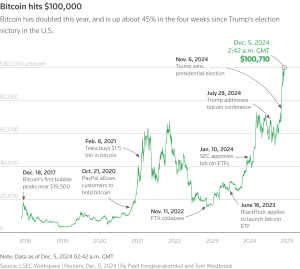
January 2020 was a strong month for Bitcoin, with its price rising by approximately 30%.
At the beginning of the year, Bitcoin was trading well below the record prices it had reached during the 2017 bull market. The cryptocurrency market was still recovering from the severe downturn that followed that earlier rally.
Bitcoin’s January advance suggested renewed interest in digital assets. Investors were beginning to pay greater attention to Bitcoin’s potential as an alternative asset, although the market remained highly speculative.
The rally was particularly notable because it occurred before the global financial disruption caused by the COVID-19 pandemic.
In March 2020, Bitcoin experienced a sharp sell-off alongside other financial assets. The cryptocurrency subsequently recovered and entered a much stronger rally later that year.
What investors can learn from January 2020
Bitcoin’s positive January performance did not mean that the rest of the year would be free from risk.
The market’s subsequent volatility demonstrated that even a strong beginning can be followed by significant losses.
For long-term investors, this reinforces the importance of considering an asset’s entire market cycle rather than judging its prospects based on one month’s performance.
Investors interested in building a financial strategy around market volatility should also understand the principles of diversification and risk management.
Related reading: The Hard Truth About Investing: What Could Go Wrong and How to Protect Yourself
2. January 2021: Bitcoin Continued Its Bull-Market Advance
Bitcoin gained approximately 14.3% in January 2021.
The cryptocurrency was entering one of the most widely discussed bull markets in its history. Institutional interest was increasing, major companies were exploring Bitcoin exposure, and more investors were becoming interested in digital assets.
Bitcoin’s price continued to attract attention as it advanced toward new records during the year.
The broader environment also played a role. Historically low interest rates and substantial monetary support during the pandemic encouraged some investors to consider alternative investments, including cryptocurrencies.
However, Bitcoin’s performance was not determined by one factor alone. Market liquidity, investor expectations, supply dynamics, and speculative demand all contributed to price movements.
Why January’s gain mattered
The January increase was part of a larger upward trend, but it was not the month’s return alone that made 2021 significant.
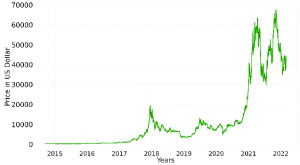
Bitcoin continued climbing during the following months and eventually reached an intraday high of approximately $69,000 in November 2021.
That rally illustrated how quickly investor enthusiasm can increase during a cryptocurrency bull market.
It also created a difficult environment for investors who entered the market when prices were already rising rapidly.
Investment lesson: Strong momentum can create opportunities, but buying simply because an asset is rising can expose investors to substantial losses if market conditions change.
3. January 2022: Bitcoin Experienced a Significant Decline
January 2022 was considerably different from the previous two years.
Bitcoin fell approximately 16.7% during the month, marking one of the two negative January periods in this seven-year comparison.
The decline occurred as investors reassessed the outlook for financial markets.
Inflation was elevated in major economies, and expectations of tighter monetary policy placed pressure on speculative assets. The prospect of higher interest rates made some investors less willing to hold assets associated with substantial price volatility.
Bitcoin was also vulnerable to changing investor sentiment after its strong rally in 2021.
The decline continued the broader downturn that eventually carried Bitcoin far below its 2021 highs.
The cryptocurrency market experienced further pressure during 2022, including the collapse of major industry businesses and the failure of several crypto-related projects.
What January 2022 teaches us
A cryptocurrency can experience a strong rally and still lose a substantial portion of its value.
Investors who purchased Bitcoin near its previous highs faced considerable losses during the subsequent bear market.
This is one reason financial planning matters when investing in volatile assets.
Money needed for rent, education, emergencies, or other essential expenses should not be exposed to the possibility of a sudden cryptocurrency decline.
Investors should also consider whether their portfolios contain too much exposure to a single asset or sector.
Related reading: How to Build a Dividend Portfolio for Steady Income
A diversified portfolio does not eliminate risk, but it can reduce dependence on the performance of one investment.
4. January 2023: Bitcoin Recorded a Powerful Recovery
January 2023 was Bitcoin’s strongest January in this seven-year comparison.
The cryptocurrency gained approximately 39.9% during the month, recovering a significant portion of the losses sustained during the previous year’s downturn.
The rally occurred after a difficult period for the crypto industry.
Investor sentiment had been damaged by the collapse of FTX in November 2022 and concerns about the financial stability of other cryptocurrency businesses.
Nevertheless, Bitcoin began 2023 with a substantial advance.
The rebound illustrated an important feature of cryptocurrency markets: prices can recover rapidly after prolonged declines, although the timing and sustainability of a recovery are difficult to predict.
Bitcoin continued recovering during 2023 as market confidence gradually improved.
Was January 2023 a signal of a new bull market?
In hindsight, January 2023 marked the beginning of a strong recovery year for Bitcoin.
However, investors could not have known with certainty at the start of the month how far the recovery would extend.
A single month’s return cannot establish whether a new bull market has begun.
Investors who attempt to predict the market based on one positive month may buy too early, buy too late, or mistake a temporary rebound for a sustained upward trend.
A more balanced approach considers several factors, including price trends, trading activity, market liquidity, regulation, and broader economic conditions.
Investment lesson: Historical recoveries demonstrate the possibility of substantial gains, but they do not guarantee that every future market downturn will be followed by a similar rebound.
5. January 2024: Bitcoin Recorded Only a Small Gain
Bitcoin’s January 2024 return was approximately 0.6%, making it nearly flat compared with the stronger moves seen in several other years.
The month was nevertheless important for the cryptocurrency industry.
On January 10, 2024, the US Securities and Exchange Commission approved the listing and trading of several spot Bitcoin exchange-traded products.
These products gave investors another way to obtain Bitcoin exposure through traditional brokerage accounts, without necessarily purchasing and directly holding the cryptocurrency themselves.
The development attracted considerable attention from investors, financial institutions, and the wider financial industry.
However, the launch did not produce a large positive return for Bitcoin over the entire month.
This is an important distinction: a major industry development does not always result in an immediate price increase.
Markets often respond to expectations before an event occurs. Prices may also be affected by profit-taking, changing demand, and developments that have little connection to the announcement itself.
What investors should understand
Bitcoin’s January 2024 performance shows why investors should distinguish between an important event and its effect on market prices.
A positive development for an asset’s adoption does not automatically mean its price will rise immediately.
Investors need to evaluate both the potential long-term significance of an event and the price they are paying for the investment.
Related reading: The Reason Why More Plan Administrators Are Turning to Alternative Investments and What It Means for You
6. January 2025: Bitcoin Continued to Rise, but Volatility Remained
Bitcoin gained approximately 9.7% in January 2025.
The positive return continued the broader trend of growing institutional participation and interest in cryptocurrency markets.
However, the month was not a guarantee of further gains throughout the year.
Bitcoin’s price remained sensitive to changes in investor expectations, monetary policy, market liquidity, and developments affecting the broader digital asset industry.
The wider crypto market also continued to demonstrate substantial differences between individual cryptocurrencies.
Some digital assets attracted significant attention, while others struggled to maintain investor interest.
For Bitcoin investors, the January gain provided a positive start to the year, but long-term outcomes depended on price movements over the following months.
Why a positive January does not guarantee a positive year
An investor who sees Bitcoin rise in January might assume that the cryptocurrency is entering another strong bull market.
Historical data does not support treating that assumption as a reliable rule.
Bitcoin can rise during one month and fall during the next. It can also deliver positive annual returns despite experiencing several substantial corrections along the way.
Investors should therefore avoid making decisions based solely on short-term price movements.
A well-defined investment strategy should consider the investor’s time horizon, financial position, risk tolerance, and reasons for holding the asset.
7. January 2026: Bitcoin Began the Year With a Decline
January 2026 delivered a different result.
Bitcoin fell approximately 10.1% during the month, according to the historical return series used in this article.
The decline demonstrated that Bitcoin’s positive January performances in several previous years did not establish a dependable seasonal pattern.
Even after a cryptocurrency becomes more widely adopted, its price can remain highly volatile.
Bitcoin’s value can respond to changing expectations about interest rates, global liquidity, institutional demand, regulation, and investor confidence.
These factors can interact in unpredictable ways, making short-term price forecasts difficult.
What does the January 2026 decline mean?
The decline does not establish that Bitcoin will perform poorly for the remainder of 2026.
Similarly, a strong January would not have guaranteed a positive result for the rest of the year.
Monthly returns provide historical information, not certainty about future prices.
For long-term investors, the more important question is whether Bitcoin fits within an appropriate investment plan and whether they can withstand substantial losses without jeopardising their financial goals.
Investors should also remember that Bitcoin is not a savings account and does not offer a guaranteed interest rate.
Its price can rise substantially, but investors can also lose a significant amount of their capital.
What Do Seven Years of January Returns Tell Us About Bitcoin?
Examining the seven January periods together reveals several important findings.
1. Bitcoin has not followed a consistent January pattern
Bitcoin recorded positive returns in five of the seven years examined and negative returns in two.
That suggests positive January performance was more common in this small sample, but it does not establish a reliable seasonal advantage.
Seven observations are insufficient to determine whether buying Bitcoin in January is consistently more profitable than buying it in other months.
2. The size of monthly returns can vary considerably
Bitcoin’s January returns ranged from a decline of approximately 16.7% in 2022 to a gain of approximately 39.9% in 2023.
That is a wide difference for a single calendar month.
The variation demonstrates why investors should not assume that cryptocurrency prices will move within a predictable range.
3. Economic conditions can matter more than the calendar
Interest rates, liquidity, regulatory developments, institutional participation, and investor sentiment can influence cryptocurrency prices.
January is not immune to these forces.
A month that begins with optimism can end with losses if economic or market conditions deteriorate.
Conversely, a period of weak sentiment can be followed by a rapid recovery.
4. Bitcoin’s monthly return does not tell the whole story
A positive January does not necessarily mean an investor made a profit.
Someone who bought Bitcoin at a much higher price before January could still be holding an investment worth less than their original purchase price.
Likewise, someone who purchased during a downturn might experience a gain even if Bitcoin’s monthly return was negative.
An investor’s actual outcome depends on the purchase price, sale price, fees, taxes, and timing of transactions.
5. Historical returns should support a strategy, not replace one
Historical data can help investors understand an asset’s behaviour, but it should not be used as the sole basis for an investment decision.
Investors should also evaluate their ability to withstand losses, the role of the asset within their portfolios, and the possibility that future market conditions will differ from the past.
Is January a Good Month to Buy Bitcoin?
There is no universal answer.
Bitcoin’s historical January performance shows that the month has sometimes produced strong gains and sometimes delivered substantial losses.
An investor who bought Bitcoin at the beginning of January 2023, for example, would have experienced a very different result from someone who bought at the beginning of January 2022.
The historical data does not establish that January is consistently the best time to buy.
Instead of relying entirely on seasonal patterns, investors can consider several approaches.
Dollar-cost averaging
Dollar-cost averaging involves investing a predetermined amount at regular intervals rather than committing all available capital at once.
For example, an investor might allocate $100 each month to Bitcoin instead of attempting to identify the perfect entry point.
This approach spreads purchases across different price levels and reduces the need to make a single market-timing decision.
However, it does not guarantee a profit, prevent losses, or ensure better returns than investing a lump sum.
Diversification
Investors can also consider spreading their money across different asset classes rather than concentrating their entire portfolio in cryptocurrency.
Depending on their circumstances, a diversified portfolio might include cash reserves, bonds, stocks, and a limited allocation to digital assets.
The appropriate allocation depends on personal financial goals, time horizon, and risk tolerance.
Long-term planning
Investors considering Bitcoin should decide in advance how much they can afford to lose and how the investment fits within their broader financial plan.
A long-term horizon does not eliminate the possibility of permanent losses.
It simply gives investors a framework for evaluating the investment beyond short-term market movements.
How to Research Bitcoin Before Investing
Investors who want to make informed decisions should consult reliable historical data and official resources.
The following external resources can help readers understand Bitcoin’s price history, technology, and regulatory context.
- CoinMarketCap: Historical cryptocurrency prices, market capitalization, and trading information.
- Bitcoin.org: An introduction to Bitcoin, its technology, and how the network operates.
- U.S. Securities and Exchange Commission: Official investor information and regulatory announcements concerning digital assets and investment products.
These resources can help readers distinguish historical facts from market predictions and promotional claims.
Investors should remember that cryptocurrency data providers can report slightly different returns because of differences in exchanges, time zones, and price calculation methods.
Frequently Asked Questions
Did Bitcoin rise every January over the past seven years?
No. From 2020 through 2026, Bitcoin recorded positive January returns in five years and negative returns in two years.
Which January was the strongest for Bitcoin in this period?
January 2023 was the strongest in this comparison, with a return of approximately 39.9%.
Which January was the weakest?
January 2022 was the weakest among the seven periods examined, with a decline of approximately 16.7%.
Does Bitcoin usually rise at the beginning of the year?
The seven-year sample shows that Bitcoin rose in January more often than it fell. However, this sample is too small to establish a dependable seasonal pattern, and past performance does not predict future returns.
Is Bitcoin a good investment for the long term?
Bitcoin may suit investors who understand its volatility and can tolerate substantial losses. It is not appropriate for everyone, and its future performance is uncertain.
Before investing, consider your financial goals, emergency savings, time horizon, and risk tolerance.
Can Bitcoin lose value even after a strong January?
Yes. Bitcoin can experience significant declines after a positive month. Monthly performance should not be treated as a guarantee of future gains.
Final Thoughts: What Bitcoin’s January History Teaches Investors
Bitcoin’s performance during January from 2020 through 2026 reveals a market characterised by opportunity, volatility, and uncertainty.
The cryptocurrency recorded strong gains in January 2020 and January 2023, continued rising in January 2021 and January 2025, and experienced declines in January 2022 and January 2026. January 2024 was nearly flat.
The central lesson is that Bitcoin does not follow a reliable calendar-based pattern.
Investors who understand this can use historical data to evaluate risk without assuming that past gains will repeat.
Rather than attempting to predict Bitcoin’s performance from the first month of the year alone, investors should focus on research, diversification, risk management, and a financial plan suited to their circumstances.
