Ai for investment decisions complete guide
Key Takeaways
- AI for investment decisions complete guide can improve choice of investment decisions making but it shouldn’t be substituted for human judgment.
- AI tools are increasingly available to everyday investors.
- Be cautious of scams offering high returns through “AI trading systems.”
- AI investment tools depend on both real and synthetic market data.
AI forecasts help assess market risks, not guarantee outcomes
Artificial intelligence (AI) has become a transformative influence in investment management. Today, AI for investment decisions complete guide has improved investors knowledge on how they can utilise advanced AI-driven tools that analyse large volumes of financial and alternative data, recognise patterns, and support more informed investment choices.
Up to 90% of investment managers are either using or want to utilize artificial intelligence in their investment operations, and 54% have actually integrated AI in various ways into their plans, according to a recent industry poll.
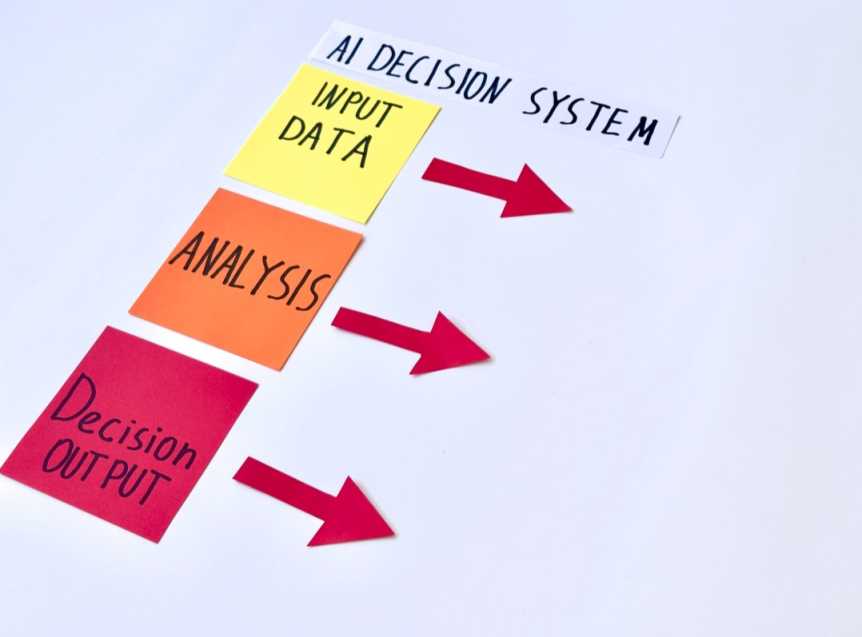
AI for investment decisions complete guide has improved the knowledge for sophisticated machine learning algorithms that can process and learn from market data in real-time and modify their tactics as market circumstances change and new information becomes available, these AI systems go well beyond mere automation.
AI offers a new set of formidable tools that can improve human decision-making and possibly improve investment outcomes when used properly, even though it cannot guarantee investment success.
Related post: how to earn money online as a teenager
AI for Investment decisions complete guide: What You Need to Know
AI for investment decisions complete guide has improved Machine learning, data science, and financial analysis come together to form artificial intelligence in investment.
While traditional algorithmic trading frequently depends on pre-programmed rules and technical indicators, and human analysts continue to carefully examine financial statements and quarterly reports, modern AI systems use a more complex, multi-layered approach.
AI systems can concurrently process unstructured data (news articles, social media sentiment, and satellite imagery) and structured data (price movements, trade volumes, financial statements) at the data input layer.
This often includes novel data sources that even dedicated research teams would struggle to monitor, such as IoT sensor data from municipalities and manufacturing facilities, patent application language patterns, and real-time cargo ship GPS positioning data.
AI distinguishes itself from both conventional algorithms and human analysts at the pattern recognition layer. For example, some systems now use large language models (LLMs) to scan and analyze mountains of social media posts, or they use natural language processing (NLP) to track the emotional content of earnings call transcripts in real-time.
Related post: how to earn money online as a teenager
7 Practical Applications of AI in Investing
1. Analyze And Pick Stocks
With the ability to analyze companies from multiple dimensions at once, including fundamental metrics like price-to-earnings (P/E) ratios and debt levels, as well as technical indicators, news sentiment, and market trends, AI stock picking has the appeal of being able to combine these dimensions in different ways and at different weights depending on the market conditions: for example, an AI system might place more emphasis on technical factors and market sentiment in times of market stress, and on fundamental growth metrics and alternative data signals in more stable times.
This often includes novel data sources that even dedicated research teams would struggle to monitor, such as IoT sensor data from municipalities and manufacturing facilities, patent application language patterns, and real-time cargo ship GPS positioning data.
AI for investment decisions has helped to distinguishes itself from both conventional algorithms and human analysts at the pattern recognition layer.
For example, some systems now use large language models (LLMs) to scan and analyze mountains of social media posts, or they use natural language processing (NLP) to track the emotional content of earnings call transcripts in real-time.
2. Summarize Investor Sentiment
While simple algorithms to classify news articles or social media posts as positive or negative have been in use for a few years, today, AI-powered sentiment analysis systems use what natural language processing experts call contextual sentiment analysis: understanding nuance, sarcasm, innuendo, and implicit meaning in text and communication, processing multiple layers of sentiment simultaneously, such as when processing earnings call transcripts, evaluating the literal content of what management is saying, but also their tone, their speaking patterns, the words they use versus in previous calls, and their responses to analyst questions.
Example
The system might notice that while a CEO’s prepared remarks are positive, their answers to follow-up questions show subtle signs of uncertainty when discussing specific business segments. This nuanced understanding of sentiment can provide early warning signals about potential business challenges before they become apparent in financial statements or stock prices.
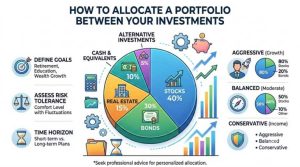
3. Assist With Portfolio Management and Asset Allocation
AI-powered portfolio management tools can help optimize asset allocation based on an investor’s goals, risk tolerance, and market conditions.
Machine learning algorithms can analyze historical data to calculate the optimal portfolio composition, taking into consideration factors like asset correlations and market volatility, and then monitor the performance of the portfolio and make rebalancing decisions when allocations have deviated from their targets or when conditions have changed significantly enough.
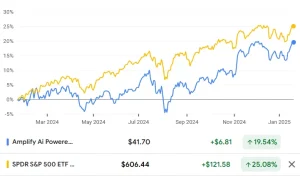
Some AI-powered ETFs, such as the Amplify AI-Powered Equity ETF (AIEQ), already have AI capabilities (in this case, IBM’s Watson) that are analyzing millions of data points and picking stocks to put into the portfolio based on several different factors.
Amplify ETFs. Even so, the actual performance of AI-based portfolio management offers a useful example of how both the advantages and drawbacks of AI can be seen in practice. AIEQ underperforms the benchmark S&P 500 ETF, as we can see in the chart below, looking at performance data through January 2025.
This performance gap illustrates an important principle: while AI can process vast amounts of data and identify complex patterns, it still isn’t inherently superior to traditional index investing.
The technology serves as a sophisticated tool rather than a magical solution for superior performance.
Offer Personalized Investment Advice
The personalization capabilities of AI extend far beyond traditional “risk tolerance questionnaires” used by human advisors and fintech apps like robo-advisors.
If AI systems could generate truly personalized investment advice based on an investor’s full financial picture (e.g., spending, career, geographic location, and even concentrated industry exposure, such as through employment, where an AI system might recommend lower exposure to technology stocks for a software engineer in Silicon Valley, recognizing that their human capital is already heavily tied to the tech sector), adjusted for cash flow patterns, future life events detected from calendar data and emails, and even local economic conditions that might impact the security of their job, then AI systems would truly be delivering personalized investment advice.
Continuous learning takes this level of personalization even further.
Static investment models, on the other hand, do not learn from market movements, nor from how an individual investor responds to volatility, nor even how a client spends the money they receive from the portfolio.
This dynamic advisory relationship is refined and personalized over time, just as a human advisor might come to know their client, but with the capability to process and remember so much more detailed information about each investor and without allowing emotions to cloud judgment.
4. Evaluate Predictive Models and Risk
No system can predict market movements, but AI models can provide a clearer understanding of the probability distributions of different potential outcomes, allowing an investor to adapt their strategy accordingly.
Risk management systems that are more advanced use AI to assess multiple risks simultaneously across a portfolio, such as market risks, correlation risks, and company-specific risks, as identified through news and regulatory filings.
Risk models based on historical correlations break down in times of crisis, and traditional risk models struggle to capture how problems in one market sector might ripple through other markets; AI systems could, at some point, dynamically map these interconnections by analyzing massive networks of financial relationships, supply chains, and shared risk exposures.
For example, an AI might identify that stress in the commercial real estate market might impact regional banks, which could in turn impact small-business lending, which would then flow through to consumer spending and retail stocks.
Going beyond correlation matrices to understand the actual mechanisms of risk transmission through the financial system, the AI may then recommend portfolio protection strategies that incorporate seemingly unrelated assets that may be effective hedges against these cascade effects.
5. Generate Backtesting Insights
Unlike conventional backtesting that essentially replays past market patterns to see how particular models or strategies would have performed in hindsight, AI-powered backtesting can understand how market conditions and relationships evolve over time. This means that it can intelligently weight historical periods based on their relevance to current market conditions.
As an example, when backtesting a trading strategy for electric vehicle stocks, an AI system might recognize that data from the 1990s automotive industry is less relevant than more recent periods, not just because it’s older, but because the business models and market dynamics of the auto industry were different. The system can also identify and adjust for regime changes periods when market relationships fundamentally shift and simulate how strategies might perform under hypothetical scenarios that haven’t occurred historically.
6. Pull Synthetic Data
Another new idea in AI for investment analysis is the creation of synthetic data, artificial data sets that capture the statistical properties and correlations of actual financial markets, overcoming the lack of historical data for rare but significant market events.
Imagine an AI system preparing for a market crisis, where we have historical data from events like the 2008 financial crisis or the 2020 pandemic selloff but only have a few examples and need to create thousands of synthetic market scenarios that keep the same key characteristics of historical crises but inject some variation that would be possible in future events.
Synthetic data creation is especially useful when creating new financial instruments or market conditions, such as when developing trading strategies for cryptocurrency markets, which have a short history, by combining the known crypto trading characteristics (high volatility, 24/7 trading, social media hype) with patterns that might be observed in more established markets at similar developmental stages to create a more comprehensive test environment for trading strategies.
A second key use case is to simulate market microstructure, such as when generating realistic order book dynamics during periods of stress to enable firms to stress-test their trading algorithms and risk management systems in a much wider range of scenarios than the historical data would allow.
Related post: how to earn money online as a teenager
Getting Started With AI for Your Investment Strategy
While the phrase artificial intelligence has become a buzzword in investing, the most advanced and powerful AI capabilities are still mostly the domain of institutional investors, not because of cost barriers but because of fundamental structural advantages that large institutions have in access to data, computing infrastructure, and specialized talent.
However, some AI tools are accessible to individual investors, but they work with significant limitations, often on public market data, with limited processing power, and with more standardized analytical methods.
Still, there are some AI tools available to individual investors, but these operate with significant constraints. They typically rely on publicly available market data, have limited processing capabilities, and use more standardized analytical approaches.
These tools still have value, but they need to be considered decision-support systems, not comprehensive investment solutions, and they are better used to augment existing investment approaches, not replace them.
For example, an AI stock screener may help flag companies that are worth further research, but it will not have access to the real-time satellite imagery or proprietary consumer spending data that institutional systems use to make split-second trading decisions.
However, the disparity in retail and institutional AI capabilities will likely diminish over time as technology advances and costs decrease, and we are already seeing this evolution in areas such as natural language processing, where broadly available large language models like ChatGPT can already analyze earnings call transcripts and news sentiment abilities that were once reserved for high-end institutional systems.
Tools Available to Individual Investors
Retail investors now have access to several categories of AI-powered investment tools, though these typically offer more constrained functionality compared to institutional solutions:
AI-Powered Robo-Advisors
The most accessible entry point for most individual investors is through robo-advisors that incorporate AI. These platforms have evolved beyond simple rule-based portfolio allocation to incorporate machine learning to improve tax-loss harvesting, portfolio rebalancing, and risk management. The key advantage is their low cost (typically 0.25-1% annual fee) and low minimum investment requirements (often $100 or less).
AI-Managed ETFs
Products like the Amplify AI Powered Equity ETF (AIEQ) offer retail investors exposure to AI-driven stock selection strategies. These funds use sophisticated AI systems to analyze company fundamentals, market trends, and alternative data sources. While their expense ratios are higher than traditional index funds (AIEQ charges 0.75%), they provide a way to access AI-driven portfolio management without needing to build or maintain the technology.
Related post: how to earn money online as a teenager
AI-Enhanced Trading Platforms
Retail brokerages have begun incorporating AI features into their trading platforms. For example, some offer AI-powered stock screeners that can identify patterns and potential trading opportunities. However, these tools typically provide analysis based on traditional market data rather than the alternative data sources available to institutions.
LLM-Enhanced Research & Analysis
Large language models like ChatGPT, Gemini, Grok, and Claude are now widely available and offer both free and low-cost monthly subscription versions. While not built as investment tools, individuals can use LLMs in creative ways; for example:
- Analysis of financial statements and documents: Investors can upload or copy/paste earnings reports, SEC filings, or company presentations to LLMs for quick summarization and key point extraction. They may also be able to do basic ratio analysis and various other computations based on the figures found in financial statements.
- Research synthesis: LLMs can similarly help analyze multiple research reports or news articles simultaneously, identifying common themes and divergent viewpoints.
- Financial education and literacy: LLMs can explain complex financial concepts and investment strategies in accessible terms, and won’t get tired or frustrated if you ask them to clarify or have additional follow-up questions.
LLMs should be used as research assistants rather than primary decision-makers. They can help explain and process information more efficiently, but they may not have access to real market data and can sometimes provide outdated or incorrect information (sometimes called “hallucinations”).
Related post: how to earn money online as a teenager
Quick Tips for Optimizing Your AI Investment Strategy
- Begin by clearly defining your investment goals and risk tolerance. This will help you select appropriate AI tools and platforms that align with your objectives.
- Research and compare different AI-powered investment platforms, considering factors like fees, minimum investment requirements, and available features.
- Start small with a portion of your portfolio while you learn how to effectively use AI tools and evaluate their performance.
- Combine multiple AI tools to analyze investments from different angles. For example, use sentiment analysis alongside traditional fundamental analysis to get a more complete picture of potential investments.
- Regularly monitor and evaluate the AI system’s recommendations and performance, ensuring they align with your investment goals and risk tolerance.
- Maintain a balanced approach by combining AI insights with human judgment and traditional investment principles like diversification and long-term planning.
How to Avoid AI Investment Fraud
As AI has become an integral part of investing, it has opened up new avenues for investment fraud, and the Securities and Exchange Commission (SEC) and other regulatory bodies have noted several emerging patterns of AI investment fraud that investors need to know about.
Many AI investment scams rely on the perception that AI is complex and sophisticated, and scammers use technical jargon and make unrealistic claims about “proprietary AI trading systems” or “guaranteed stock picks using advanced artificial intelligence” to fool victims.
One of the most dangerous trends is unregistered investment platforms that claim to be AI driven; however, they are not registered with any regulatory authorities, and make outlandish promises regarding returns.
If you are considering an investment platform, it should be registered with the appropriate regulatory authorities; you can check whether it is registered by going to the SEC website or using FINRA’s Broker Check.
Caution
The SEC has also cautioned that AI-enabled technology scams that appear more authentic are being created, such as AI-generated content like deepfake videos and fake audio or phone calls from AI technology that pretend to be company executives or financial professionals, along with AI-generated websites, marketing materials, and AI chatbots posing as customer service representatives to trick investors.
To protect yourself from AI investment fraud:
- Verify the registration status of any investment platform or professional before investing
- Be wary of investment frauds that claim to use “AI” as a marketing tactic. Legitimate AI investment tools should be transparent about their methodologies and limitations.
- Be extremely skeptical of any promises of guaranteed or outsized returns or “risk-free” AI trading systems
- Independently verify the identity of investment professionals, especially when communications occur entirely online
- Remember that legitimate AI tools can enhance investment analysis but cannot guarantee profits
- Be particularly cautious of high-pressure sales tactics or requirements to make quick decisions
Conclusion
This is true for many AI-based tools, which are becoming increasingly accessible to retail investors, but still tend to be limited to sophisticated institutional investors.
But it is important to note that AI is not perfect and should be utilized in conjunction with a well-rounded investment strategy that incorporates due diligence and risk management, and human oversight and decision-making.
Related post: how to earn money online as a teenager